Wednesday, July 6, 2011

Scary Weed

Dangerous 10-Foot Megaweed Invades New York


Giant Hogweed can grow up to 20 feet tall. Credit: New York Department of Environmental Conservation
Giant hogweed might sound like something out of Harry Potter, but it's straight out of New York. This noxious weed has spread across the state, threatening humans with sap that causes severe burns, blistering, permanent scarring and even blindness.
The outbreak has grown so bad that the N.Y. Department of Environmental Conservation (DEC) has issued a giant hogweed warning and set up a hotline.
Giant hogweed is native to the Caucasus region of Eurasia, and was brought to the United States in the early 1900s. The gargantuan plant blooms bunches of tiny white flowers the size of umbrellas, which made it a showpiece in ornamental gardens, including one in Rochester, N.Y. In the century since it was planted there, it has spread across the state, with 1,004 confirmed sightings so far this blooming season. [Countdown: The Most Disgusting and Deadly Flowers]
In the words of Charles O'Neill, coordinator of the Cornell Invasive Species Program, hogweed is like "Queen Anne's lace with an attitude." Specimens of the megaflora grow "more than 10 feet tall with two-inch thick stems, flowers two or more feet across and leaf clusters as wide as you can stretch your arms," O'Neill explains in the New York Sea Grant's official giant hogweed fact sheet.
If you see it, "stay clear!" O'Neill warns. Hogweed is New York's most striking, dangerous and invasive plant, and its sap "can make a case of poison ivy seem like a mild itch."
Burns and blisters caused by giant hogweed sap. Credit: USDA Animal and Plant Health Inspection Service
"If the sap gets on your skin and it's exposed to sunlight ... you end up with third-degree burns, oozing and scars," Naja Kraus, the DEC's giant hogweed program coordinator, told the press. "If it gets in your eyes, you can go blind."
The DEC urges people to phone the Giant Hogweed Hotline to report finding a specimen of the dangerous plant. They'll immediately dispatch a crew to dispose of it.

Rising river complicates Exxon oil spill cleanup

The Associated Press
 
Updated: Tue. Jul. 5 2011 6:11 AM ET
LAUREL, Mont. — The initial cleanup along the oil-fouled Yellowstone River could be tested Tuesday as rising waters make it harder for Exxon Mobil Corp. to get to areas damaged by the crude spilled from a company pipeline.
The National Weather Service predicts the Yellowstone River, swelling with mountain snowmelt amid hot summer temperatures, will peak at Billings on Tuesday afternoon -- a day after Exxon Mobil Pipeline Co. President Gary Pruessing promised to do "whatever is necessary" to mop up oil spilled from the duct at the river bottom. That pledge included sending crews to walk the river banks in search of pooled oil once the flooding river recedes.
The 12-inch pipeline burst Friday upstream from a refinery in Billings, where it delivered 40,000 barrels of oil a day. Up to 1,000 barrels, or 42,000 gallons, of crude oil oozed into the legendary Yellowstone before the leak was stopped, according to Exxon Mobil estimates.
After downplaying assertions from state and federal officials that damage from the spill was spread over dozens of miles, Exxon Mobil acknowledged under political pressure Monday that the scope of the leak could extend far beyond a 10-mile stretch of the river. Company officials also said their statements were misconstrued.
"We're not limiting the scope of our cleanup to the immediate site," Pruessing said at a news conference along the river near Laurel, as crews mopped up oil in the background. "We are not trying to suggest in any way that that's the limit of exposure."
The 20-year-old Silvertip pipeline followed a route that passes beneath the river. It was temporarily shut down in May after Laurel officials raised concerns that it could be at risk as the Yellowstone started to rise. Also twice in the last year, regulators warned Exxon Mobil of several safety violations along the line.
The company decided to restart the line after examining its safety record and deciding it was safe, Pruessing said.
The cause of the rupture has not yet been determined, but company and government officials have speculated that high waters in recent weeks may have scoured the river bottom and exposed the pipeline to damaging debris.
The Yellowstone River at Billings had dropped nearly 2 feet by Monday from its peak Saturday morning, according to the National Weather Service. But temperatures reached the mid-90s Sunday, causing the melt of mountain snow to accelerate.
It is possible cleaned areas would become fouled again as waters rise.
Gov. Brian Schweitzer, who earlier criticized the company's inspection of the spill, planned to tour the damaged areas Tuesday.
Underscoring rising anger over the spill among some riverfront property owners, Pruessing was confronted after his news conference Monday by a goat farmer and environmental activist who said his partner was sickened by oil fumes and had to be taken to the emergency room.
"I need to know what we've been exposed to. People are sick now," Mike Scott said. Scott's partner, Alexis Bonogofsky, was diagnosed Monday with acute hydrocarbon exposure after she experienced dizziness, nausea and trouble breathing, he said.
Pruessing said air and water monitoring had not revealed any health risks. But he told Scott the company would provide the public with more information.
The Environmental Protection Agency said in a statement Monday afternoon that officials were still taking air and water samples to determine the impacts.
EPA officials said they and U.S. Fish and Wildlife Service personnel conducted an aerial assessment of the Yellowstone from Laurel to 30 miles downstream of Billings, finding oil deposits along the river banks, in slow water and in small pools in backwaters at intermittent points.
The U.S. Department of Transportation, which oversees pipelines, notified Exxon Mobil in July 2010 of seven potential safety violations and other problems along the pipeline. Two of the warnings faulted the company for its emergency response and pipeline corrosion training.
Transportation Department spokeswoman Patricia Klinger said the company has since responded to the warnings and the case was closed.
The company also was cited for "probable violations" in a February letter. Those included inadequate pipeline markers in a housing development, a section of pipeline over a ditch covered with potentially damaging material and debris, vegetation in a housing area that covered a portion of line and prevented aerial inspections, and a line over a canal not properly protected against corrosion.
The company responded in a March letter that it had corrected all of the problems, most of them within a few weeks of being notified. Company spokesman Alan Jeffers said there was no direct connection between those problems and the pipeline failure.
"These are important things we needed to take care of, and we took care of them by the time we got the notice," Jeffers said. No fines were issued, he said.
The Yellowstone spill has amplified calls from some safety advocates and environmentalists who want the government to impose more stringent regulations on the industry.
Anthony Swift, a policy analyst with the Natural Resources Defense Council, said the fact that Exxon Mobil's Silvertip line was apparently in compliance with federal rules underscores that those rules need to be strengthened.
"These are the sort of spills that we shouldn't be tolerating," Swift said. "We need to incorporate tougher safety standards."
The company said only one case of wildlife damage -- a dead duck -- had been reported, but Pruessing said that could not be confirmed. A local newspaper, the Billings Gazette, has run pictures of a turtle and a group of pelicans apparently with oil on them.
If another surge of water pushes oil further into back channels as expected, it could be a potential threat to fisheries, said Bruce Farling, executive director of Trout Unlimited's Montana chapter. Farling said there are many fish eggs and recently hatched fish in those channels.
The stretch of the Yellowstone where the spill occurred contains sauger, bass catfish, goldeye, trout and, farther downstream, below Miles City, native pallid sturgeon.
"If we get a bunch of oil in some of these backwater areas, these are precisely where these small fish rear," Farling said.

Industry Views Prevail on Radiation Risks


Health experts unheard on health effects of Fukushima

by Steve Rendall and Patrick Morrison
U.S. media coverage of the nuclear disaster in Japan contains vanishingly little serious discussion of the human health risks posed by the radiation escaping from the Fukushima nuclear facility.
In place of a discussion informed by experts on these risks, journalism largely conveys vague, industry-friendly reassurances, frequently including no sources with expertise on the health effects of radiation on humans.
New York Times reporter William Broad reported (3/22/11) that “health experts” deemed a radiation plume that had reached the U.S. from Japan to be harmless:
Health experts said that the plume’s radiation had been diluted enormously in its journey of thousands of miles and that—at least for now, with concentrations so low—its presence will have no health consequences in the United States. In a similar way, faint radiation from the Chernobyl disaster spread around the globe and reached the West Coast in 10 days, its levels detectable but minuscule.

Who were Broad’s “health experts”? He didn’t name any, unless you count the Department of Energy, which is better known for promoting nuclear energy than for its medical expertise. Broad wrote that the DOE said that the radiation plumes, in his words, “posed no health hazard.”
There is scientific disagreement about the risks of ionizing radiation. Some scientists hold that there’s no evidence that low-level radiation is harmful (e.g., Health Physics Society, 7/10), or insist, for instance, that the accidental radiation release at Three Mile Island caused little or no harm to humans (NRC Backgrounder, 8/09). But the prevailing scientific view is that there’s no threshold below which radiation exposure is safe—in other words, that all radiation, including the ever-present background radiation, is a potential health risk—and that the risk decreases linearly, so that even decreasing a radiation dose by 99 percent still leaves 1 percent of the risk. According to this “linear, no-threshold” model of radiation risk, a given amount of human radiation exposure will produce the same number of cancers, no matter how many people it is distributed among.
In 2006, the National Academy of Sciences concluded, in the final paragraph of its 323-page report on the biological effect of ionizing radiation, that current scientific evidence “is consistent with the hypothesis that there is a linear, no-threshold dose-response relationship between exposure to ionizing radiation and the development of cancer in humans.”
An Extra! survey of New York Times and Washington Post coverage and commentary on the first eight days of the Fukushima story found that Broad’s reporting was typical. Out of 89 Fukushima articles appearing in the two papers during the period (3/12–19/11), no story mentioned the NAS’s conclusions specifically, nor generally described the notion that there was no safe level of radiation exposure.
Just 6 percent of total sources were presented as health experts—that is, medical or scientific experts with specialized knowledge of the effects of ionizing radiation on humans—and of these, only two-thirds were actually identified by name. These sources were used to comment on, for instance, comparisons between the Fukushima and Chernobyl accidents, the wisdom of taking iodine to ward off thyroid cancer, whether or not Japanese imports posed a threat to the U.S., and the levels of radiation exposure facing Japanese reactor workers and civilians.
With few exceptions, these sources did not play down radiation risks in Japan, but neither paper cited a single health expert warning that radiation from Japan might pose any real threat to the United States. For instance, regarding the radioactive plume passing over the U.S. from Japan, the Times (3/19/11) quoted a spokesperson from the California Department of Public Health saying that “all data from state and federal sources show that harmful levels of radiation won’t reach California.’’
In the case of the unnamed experts, identified, for instance, as “health experts,” “scientists” or “studies,” it wasn’t clear that the journalists had actually consulted with sources. For instance, the Times (3/17/11) reported, “Health and nuclear experts emphasize that radiation in the plume will be diluted as it travels and, at worst, would have extremely minor health consequences in the United States, even if hints of it are ultimately detectable.”
So dismissive was the coverage of health concerns that among articles that mentioned radiation and human health issues, just 30 percent (17 of 57) included one or more sources identified or presented as a health experts including unnamed sources—a rate that held constant in both papers.
Reassuring claims were often attributed to sources with no identified expertise in relevant scientific fields, as in a Times article (3/16/11) that reported that “experts say” Japanese officials had “taken precautions” concerning public health that would prevent Fukushima from “becoming another Chernobyl, even if additional radiation is released.”

Journalists may like to seek simple (and reassuring) answers from “science,” but science is rarely so straightforward. A 1990 Columbia University study found that local increases in cancers following the Three Mile Island accident couldn’t be conclusively attributed to radiation releases (American Journal of Epidemiology, 9/90). But a 1997 follow-up by the University of North Carolina, led by epidemiologist Steve Wing (see "Coverage of Radiation Risks 'Astonishingly Irresponsible,'" Extra!, 7/11), faulted the Columbia researchers, whose court-ordered study allowed insurance companies to influence scientific questions, for accepting unreasonably low assumptions about the magnitude of radiation releases in the disaster. Wing’s team concluded that the releases had contributed to cancer increases (Environmental Health Perspectives, 1/97). Corporate journalists, however, virtually always reflect the Columbia study’s findings (e.g., Associated Press, 3/16/11; Washington Post, 9/14/10).
Even within scientific circles that acknowledge the harmful effects of low-level radiation, there is a spectrum of views. The United Nations Scientific Committee on the Effects of Atomic Radiation Chernobyl assessment (2008) predicted 6,000 additional cases of thyroid cancer, but little other low-level radiation damage to people. Using some of the same data, the Union of Concerned Scientists (4/22/11) predicted that Chernobyl would end up causing 50,000 excess cancers, and 25,000 additional deaths. A large array of scientific publications assessed in the book Chernobyl: Consequences of the Catastrophe for People and the Environment (New York Academy of Sciences, 2009) suggested that Chernobyl has already contributed to hundreds of thousands of excess deaths.
While it might be beyond the abilities of daily journalists to determine who is right in these scientific disagreements, it’s not hard to convey that they exist, a fact that would be hard to glean from corporate media. But the short history of scientific literature about the effects of ionizing radiation on humans demonstrates that the scientists who have urged more caution have had their views vindicated over time.
For decades, distinguished scientists who insisted, contra industry claims, that there was no safe level of radiation exposure suffered professional marginalization for challenging the nuclear establishment. The late nuclear chemist and medical researcher John Gofman first argued against the notion there were safe levels of radiation in the 1960s as the director of the Biomedical Research Division at the DOE’s Lawrence Livermore National Laboratory in California. Gofman’s clashes with the DOE over its notions of safe radiation levels resulted in his being stripped of research funding and his departure from Livermore in the early 1970s.
However, in recent years several major scientific organizations have adopted the views of Gofman and his colleagues. In addition to the NAS, Gofman’s no-threshold model has been adopted by the UN Scientific Committee on the Effects of Atomic Radiation (2000), the National Council on Radiation Protection and Measurements (2001) and the United States Research Council (an arm of the NAS, 2004), among others.
In reporting on technical scientific issues such as radiation effects, journalists inexpert in the relevant fields of science are wrong to take sides. The best they can do is to inform readers on the range of opinions and the track records and relative independence of the researchers behind them. This is clearly not being done with regard to the Fukushima fallout—a failing that could have dangerous consequences.

Researchers engineer functioning small intestine in laboratory experiments

Researchers engineer functioning small intestine in laboratory experiments

July 6, 2011 by Editor
Researchers at The Saban Research Institute of Children’s Hospital Los Angeles have successfully created a tissue-engineered small intestine in mice that replicates the intestinal structures of natural intestine — a necessary first step toward someday applying this regenerative medicine technique to humans.
The research team took samples of intestinal tissue from mice. This tissue comprised the layers of the various cells that make up the intestine, including muscle cells and the cells that line the inside (epithelial cells). They then transplanted that mixture of cells within the abdomen on biodegradable polymers (scaffolding).
The researchers were able to grow new, engineered small intestines that had all of the cell types found in native intestine. They were also able to identify which cells had been provided, and all of the major components of the tissue-engineered intestine derived from the implanted cells.  They found that the new organs contained the most essential components of the originals.
“For children with intestinal failure, we are always looking for long-term, durable solutions that will not require the administration of toxic drugs to ensure engraftment.  This tissue-engineered intestine, which has all of the critical components of the mature intestine, represents a truly exciting albeit preliminary step in the right direction,” said Henri Ford, MD, Vice President and Surgeon-in-Chief at Children’s Hospital Los Angeles.
Next up are additional tissue-growing experiments—each one of which may bring that much closer the prospects of clinical testing and a solution for babies in need.
Ref.: Tracy C. Grikscheit, et al., A Multicellular Approach Forms a Significant Amount of Tissue-Engineered Small Intestine in the Mouse, Tissue Engineering Part A, 2011; 17 (13-14): 1841 [DOI: 10.1089/ten.tea.2010.0564]

Robo-worm to wriggle through rubble to quake survivors

Robo-worm to wriggle through rubble to quake survivors

July 6, 2011
Source: New Scientist Tech — Jul 5, 2011
Prototype Wormbot
Prototype wormbot based on C. elegans (credit: Jordan Boyle)
Jordan Boyle at the University of Leeds, UK, has closely studied the nematode worm Caenorhabditis elegans and has developed a robot based on it, using control software that mimics its unique motion.
One day he hopes it could head for earthquake-hit cities in search of people trapped in collapsed buildings.
Based on the biology of the nematode, Boyle created a 2-meter-long, 16-centimeter-wide robot that uses sensors to control motion in the same way as the worm.
The robot has 12 articulated segments, each of which can swing from side to side using a geared motor in its center.
The robot senses the angle each segment describes with respect to its spine and control software uses this information to calculate the robot’s overall undulation pattern and orientation. Microphones, carbon-dioxide sensors (sensing breath) and infrared cameras on its “head” would allow the robot to wriggle its way to people in trouble, says Boyle.
C Elegans
C. elegans locomotion in increasingly (from left) resistive media (credit: Jordan Boyle)


Yellowstone oil spill has spread farther, Exxon Mobil says

latimes.com/news/nationworld/nation/la-na-oil-spill-yellowstone-20110705,0,1443004.story

latimes.com

Yellowstone oil spill has spread farther, Exxon Mobil says

The oil has spread 15 miles beyond the leak, the firm says. Montana Gov. Brian Schweitzer says all oil and gas pipelines that cross state waterways will be reviewed and those that do not meet standards will be closed.

Times Staff and Wire Reports
July 5, 2011
LAUREL, Mont.

— Oil from a Yellowstone River pipeline has spread at least 15 miles beyond the initial leak, Exxon Mobil acknowledged Monday — five miles farther than the company estimated a day earlier.

Exxon Mobil Pipeline Co. President Gary Pruessing pledged to do "whatever is necessary" to find and mop up spilled crude from the 12-inch pipeline that broke at the bottom of the river near Billings over the weekend.

As cleanup of up to 42,000 of gallons of oil intensified, Montana Gov. Brian Schweitzer said authorities would review the safety of all oil and gas pipelines that cross state waterways and close those that do not meet standards.

"We'll make the decision over the next couple of days whether to shut off some pipelines," Schweitzer told Reuters in a telephone interview. "The last thing I want is for another pipeline to break."

The cause of the spill has not been determined, but officials have speculated that surging waters may have scoured the river bottom and exposed the pipeline to debris that could have damaged the pipe.

Pruessing said the company was using aircraft to assess damage, but the flooding river prevents crews from venturing out in boats or walking the banks in some areas for a closer look. That will happen when the river recedes, he said.

"The river is well over its banks, very turbulent," he said at a news conference along the Yellowstone near Laurel. "I've never seen the river like this in my life."

The spill's effects on wildlife were unclear Monday, but the Audubon Society and experts from International Bird Rescue would be on hand to help, Pruessing said.

Exxon Mobil is continuing to test air and water for safety, he said, and will make the results available to the public.

After the news conference, Pruessing was confronted by an angry goat farmer and environmental activist who said his wife had been sickened by oil fumes and had to be taken to the emergency room.

"I need to know what we've been exposed to. People are sick now," said Mike Scott, who also works for the Sierra Club. Scott said his wife, Alexis Bonogofsky, was diagnosed Monday with acute hydrocarbon exposure after experiencing dizziness, nausea and trouble breathing.

Bonogofsky, who works for the National Wildlife Federation, had gone to the riverbank with her camera to photograph oil on their property south of Billings.

The Yellowstone River, the longest undammed river in the continental United States, is renowned for its trout fishing and bird life. The leak happened more than 100 miles downstream from Yellowstone National Park.

People just die and no one notices

What does this say about our society?  Do we not even see each other any more.


Sydney Woman's Remains Found Years After

Death

Sydney Body Found
07/ 6/11 01:53 AM ET   AP
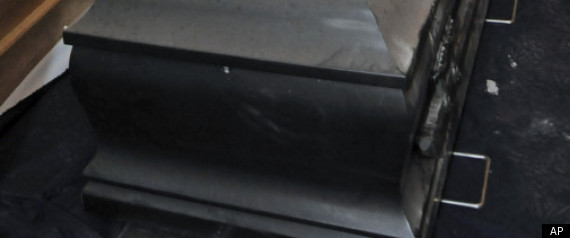
SYDNEY — When an elderly Australian woman apparently vanished from view eight years ago, no one bothered to call the police. Not her relatives, her neighbors, or government officials, who kept paying her welfare benefits into a bank account that sat untouched.
New South Wales state police said Wednesday that they discovered the woman's skeletal remains on the floor of her Sydney home on Tuesday, after her sister-in-law finally called them to report that she had not heard from the woman – who would have turned 87 next month – since 2003.
"It's sad that the woman appears to have died several years ago without anyone noticing," said police Acting Superintendent Zoran Dzevlan.
Police were trying to determine exactly when the woman died, but said they didn't think the death was suspicious.
The woman, whose name was not released by police, was a recluse who had no relatives except for her sister-in-law, Dzevlan said. The two had a fight in 2003 and never spoke again. Police have not said why the sister-in-law waited years to report the woman missing, or what prompted her to call now.
As the years passed, utility companies cut off the power and water to the woman's home, police said. Centrelink, the government's welfare agency, continued to pay her benefits to her bank account, which remained untouched. Her mail had been redirected to her sister-in-law's home before 2003, but eventually stopped. Neighbors told police they hadn't seen her in years and assumed the house was vacant.
Police said the woman's home was locked and furnished, but looked like no one had lived there for years.
"To hear today that an elderly lady can pass away, be dead for eight years and for Centrelink to still be sending checks to her bank account and for those checks not to be cashed – surely that must set off the alarm bells within government," New South Wales Police Minister Mike Gallacher said.
"(It) really does highlight the need for this state and indeed our community to work closer at building relationships with our community," he said.

Massachusetts Woman Dead in Public Pool for Two Days


The body of a Massachusetts woman went unnoticed for two days in a Fall River public swimming pool, which remained open to the public and was even visited by health inspectors, generating outrage and calls for an investigation.
Marie Joseph, 36, was found Tuesday evening by a passerby, two days after she experienced an apparent accident on the water slide at the 12-foot-deep, state-run Vietnam Veterans Swimming Pool, officials said.
Police said Joseph took her neighbor's son, 9, to the pool Sunday afternoon.
"'Marie unexpectedly slid down the slide, landing on top of him," Fall River Police Chief Daniel Racine said Wednesday. "He further stated he believed Marie went under the water and did not surface."
Police said the boy notified lifeguards immediately after the incident, around 2 p.m. Sunday, but no action was taken.
B.J. Fisher, director of health and safety at the American Lifeguard Association, said lifeguards should never ignore warnings.
"We teach our lifeguards to act like the 911 system," Fisher said. "If you talk to them, they should never question you."
William Flanagan, mayor of Fall River, called Joseph's death "tragic" and said he was demanding an investigation.
"It has come to my attention that health inspectors from the city visited the pool on Monday and Tuesday and inspected the facilities. I have immediately placed those inspectors on administrative leave," he said, adding the city plans to offer assistance to the state Department of Recreation and Conservation, which manages the pools and is conducting the investigation.
A photographer for the Herald News visited the pool Tuesday before Joseph's body was discovered and took aphotograph of the crowded pool, which only recently opened for the summer.
Police said it was unclear how many people, if any, had seen Joseph's body in the pool before it was recovered late Tuesday evening. Her body is being autopsied to determine cause of death.
All 30 of Massachusetts' deep-water pools will be closed until further notice.

New Homeowner Finds Dead Woman in House in Melbourne FL

Orlando -
Matthew Everly bought a house on Cherie Down Lane in Cape Canaveral, FL as a foreclosure home on November 18, 2010.  Long after bank contractors had cleaned the house, inspectors toured the home, and real estate agents showed the home did Matthew enter the house he bought to inspect his new property and change the locks.  That’s when he found an elderly woman who had been missing for over a year.  She was found in the garage in her silver Chevy Nova with a blanket and a pillow.
In fact, the house he had just bought was her home that fell into foreclosure.  Kathryn Norris Kunzweiler owned the home and neighbors say she was a bit of a recluse.  Power records show her electricity had been off for 18 months.  In 2009 she had called the sheriff’s office to complain that her neighbors had messed with her car and it would not start.  Though her neighbors deny ever touching the car or entering her property, the sheriff’s office did say that once found, that car would not start but gave no reason.
Investigator Marlon Buggs found no foul play, and no forced entry. All that was left were her skeletal remains which investigators used for DNA testing to positively identify her with an out of state relative also giving a sample of DNA.  USAToday reported Buggs saying “Society has changed, and neighbors don’t communicate like they did in the past”, and said they have no positive time when she died. Neighbors say they aren’t really sure when the last time they saw her.  It didn’t raise any red flags in the community since she was rarely seen outside her house.
A candle was also found in the car, and police speculate she stayed in her car to catch her suspect that was messing with her car.