Monday, October 31, 2011

Work Happy


How to be happy at work


twp - What does it take to create a happy workplace?

By Published: October 27, 2011

Shawn Achor, author of The Happiness Advantage and one of the world's leading experts in human potential, has lectured on his research in 48 countries. After more than a decade at Harvard University, Achor founded Good Think Inc. to share this research with organizations worldwide. This interview was conducted by Tom Fox, author of the Washington Post’s Federal Coach blog.


How can leaders create a culture of happiness?
First, take time for yourself. We have the greatest amount of control over our own mindset. Create a positive habit that takes about two minutes a day and do that for 21 days in a row.  In trainings we have people journal about one positive experience, writing about every detail they can remember about a positive experience over the past 24 hours. Or meditate, exercise or write a kind letter to a friend. All these habits increase happiness and retrain the brain to get stuck in a positive pattern for evaluating work.
Sometimes managers get so focused on problems they miss seeing successes and finding the meaning in their work. These positive activities change that pattern and return power to the individual. Along with higher levels of happiness, the success rates on your team start to improve, which is where it starts to move from an individual to leadership.
We all work for money, but money only gets us in the room. It doesn’t mean we’re engaged once we’re there. Praise motivates us and improves productivity, but it has to be frequent and specific and based on reality. You can’t say, “I’m happy you work on this team.” It has to be, “I’m so grateful for the work you did on that project, getting it in by 9 o’clock yesterday.” That encourages specific behavior. Some leaders sugarcoat the present and then make bad decisions in the future and that causes people to mistrust positive leaders. We’re trying to create rational optimists, which means you start with a realistic assessment of the present but believe your behavior matters. 
What are the characteristics of successful leaders?
Positive leaders do the opposite of what you expect in the midst of their challenges. They invest more in social support networks and spend more time thanking people and having face-to-face conversations with their employees. When I was working with Harvard students, I found many spent 18 hours a day in the library when they got stressed. They’d come out bleary eyed and depressed. Their grades were dropping and they hated Harvard.
I told them they were cutting themselves off from the greatest predictors of happiness and success. Social support is the greatest buffer against depression and predictor of success, according to research I did on 1,600 individuals. Positive leaders also recognize it’s not just intelligence that creates success. Seventy-five percent of employees’ job performance is predicted by three factors: belief that their behavior matters; their social support network at work and at home; and seeing stress as a challenge rather than a threat.
How does happiness lead to better performance?
Positive mindset is the precursor to greater levels of success. If we can raise the levels of positivity in the midst of challenges, we find productivity and engagement rises and creativity triples. Every business outcome improves when an employee feels positive. We started to see that when it wasn’t working. We assumed employees at successful companies would be happy. We thought we could work harder and then we would be successful and happier and that is how we manage, how we see and even how we think in a down economy. We found the formula was backwards. Happiness led to higher success rates, but higher success rates did not necessarily lead to happiness.
How do you know if you’re the right kind of optimist?
If you are only seeing the good things, you’ve got a distorted view of the world. If you recognize both strengths and weaknesses of your team and yourself, you are starting in a rational place. The trouble is when a manager thinks that a person is negative or underperforms and will never change. That can create problems. We’ve found that hospitals that report the greatest number of medical errors have some of the lowest malpractice rates. It’s completely counterintuitive, but the positive leaders created the psychological thinking to bring up problems that could fixed. On teams without the psychological safety, people felt they couldn’t make mistakes or bring up negatives—and problems never got fixed and even got worse.
If you had one more hour a day, how would you use it?
I’d make it completely altruistic. It’s actually selfish. If I wrote emails or called friends, I’d feel like I’m spreading positivity and happiness. When you do kind things for other people, it creates a longer happiness effect than if you do something for yourself. Eating a chocolate bar makes us happy for five minutes. Donating money to charity keeps that cycle of feeling good going because you’re making positive change in the world.
We found that people who gave social support at work and asked friends to lunch or helped someone with their work are far and away the happiest people. They were 40 percent more likely to receive a promotion and had significantly less burnout. The more you give, the more you get in terms of meaning, happiness and success rates.
Like On Leadership? Follow us on Twitter and Facebook.


Scientific Evidence Point To Laughter Is The Best Medicine

I've had some personal things going on for me lately. I've been told that my stress levels have caused chemical imbalance in my body to where I am always in a high alert status...fight or flight and all that. What has been "prescribed for me are relaxation techniques that include breathing and exercise but it was also recommended that I eat chocolate, have sex and/or watch a comedy (i.e. laugh). so this article might save someone from the troubles that I am working through now.

Laughing may help ease blood pressure, boost mood and enrich health in other ways

KHAM/REUTERS - Members of the Laughter Yoga club practise laughing during morning exercise at a public park in Hanoi September 24, 2011.

By Carolyn Butler, Published: October 24, 2011


Whenever I took a tumble or scraped my knee as a child, my mother typically assessed the situation and then promptly tickled me, counseling, “Laughter is the best medicine.” This trick remains remarkably effective with my own boys and, to this day, YouTube videos oflaughing babies or cats playing with printers still have the power to make me feel a bit better when I’m under the weather.
But while giggling is certainly a great distraction when you’re hurt or feeling low, I can’t help but wonder whether the old adage is true: Can laughter really have a positive impact on health?


There is a growing body of researchindicating that a good guffaw may improve immune function, help lower blood pressure, boost mood and reduce stress anddepression. And despite a dearth of more rigorous, long-term studies, the sum of these findings is compelling, says cardiologist Michael Miller, a professor at the University of Maryland School of Medicine who has researched the topic.
“We don’t have any clinical outcome evidence to show that laughter will reduce heart attacks or improve overall survival. However, we do have a number of studies that have shown that there is a potential upside, in terms of vascular benefits and also overall health,” he explains. “These findings certainly support laughter as a reasonable prescription for heart health and health in general, especially since there’s really no downside.”
The study reports on six experiments in which people watched television sitcoms or a live comedy performance, either alone or with others. The participants were then subjected to various measures that prompt discomfort, including wearing an ice-cold sleeve or a tight blood-pressure cuff and squatting against a wall for long periods. In all cases, laughing with buddies for just 15 minutes resulted in an average 10 percent increase in pain threshold. A change in affect alone — in other words, getting happy but not laughing out loud — did not have a significant impact on pain sensations.
According to lead author Robin Dunbar, an evolutionary anthropologist, these results back up prior research suggesting that people who laugh need less pain medication after surgery. She explains that if laughing “triggers endorphin activation, then it may have direct [health] benefits, because there is a possibility that endorphins help to ‘tune’ the immune system.”
Still, we’re not just talking about a snicker here and there. The key is that real, true, unforced laughter is “an energetic, stressful activity that stirs up all of our physiological systems . . .involving strong vocalization, an increase in heart rate and blood pressure and muscle contractions all over the body,” says Robert R. Provine, a neuroscientist at the University of Maryland Baltimore County and the author of “Laughter: A Scientific Investigation.” He explains that modern laughter of the “ha-ha” variety evolved from the “pant-pant” of primates and early humans, which he says is “really the sound of rough-and-tumble play.” Indeed, the new Oxford study found that endorphins are released only when “we ‘laugh till it hurts,’ ” meaning we end up running out of breath or physically exhausted, says Dunbar. “It is only full belly laughs that do this, not polite titters.”
But before you work up a new stand-up routine, Provine points out that laughter often has little to do with jokes. “Real laughter is unconscious — you don’t decide to laugh, it just happens — and if you look at what people are doing before or during a laugh, it’s usually not associated with jokes,” he says.
Dunbar says the most important benefit of laughter may be that it brings people together, which is clearly good for emotional health. “When you laugh, you’re almost always in the presence of another person, whether they’re physically present or imagined on radio or TV,” agrees Provine, who has shown that laughter in social settings is 30 times as common as when a person is alone.
He says that those studying the effects of laughter need to tease out “to what extent any health benefits of laughter are associated with the social context of laughter.” People are far more likely to giggle when others do (which explains laugh tracks on television sitcoms), he says. “It could be that it’s the playful interaction with friends, family and lovers that makes the difference [in health measures], and not the physical act of laughter itself.”
For now, I intend to keep using the tickle cure on my kids — and I no longer feel guilty about watching those YouTube videos of babies guffawing. In fact, I will no longer feel guilty about inflicting them on others, either. Because who can’t use a few more laughs in her life, regardless of how or why or even if they make you healthier?

Friday, October 28, 2011

MIT Energy Initiative Explores Scalable Energy Alternatives


Harnessing the Earth, the atom and the leaf

There are many sources that can make a contribution to our energy supply, but likely not at a major scale in the near future.

Beyond wind and solar power, a variety of carbon-free sources of energy — notably biofuels, geothermal energy and advanced nuclear power — are seen as possible ways of meeting rising global demand. 

But many of these may be difficult to scale up enough to make a major contribution, at least within the next couple of decades. And a full accounting of costs may show that some of these technologies are not realistic contributors toward reducing emissions — at least, not without new technological breakthroughs.

Biofuels have been an especially controversial and complex subject for analysts. Different studies have come to radically different conclusions, ranging from some suggesting the potential for significant reductions in greenhouse gas emissions to others showing a possible net increase in emissions through increased use of biofuels.

For example, a 2009 study from MIT’s Joint Program on the Science and Policy of Global Change found that a major global push to replace fossil fuels with biofuels, advocated by many as a way to counter greenhouse gas emissions and climate change, could actually have the opposite effect. Without strict regulations, that study found, the push to grow plants for biofuels could lead to the clearing of forestland. But forests effectively absorb carbon from the air, so the net effect of such clearing would be an increase in greenhouse gases entering the atmosphere, instead of a decrease.

Another recent MIT study, by researcher James Hileman of MIT’s Department of Aeronautics and Astronautics, found that replacing fossil fuels with biofuels for aviation could have either positive or negative effects — depending on which crops were used as feedstock, where these were located, and how the fuels were processed and transported.

Key to biofuel’s success is the development of some sort of agriculture that wouldn’t take away land otherwise used to grow food crops. There are at least two broad areas being studied: using microbes, perhaps biologically engineered ones, to break down plant material so biofuels can be produced from agricultural waste; or using microscopic organisms such as algae to convert sunlight directly into molecules that can be made into fuel. Both are active areas of research.
For the former, one problem is that traditional processes to break down cellulose use high temperatures. “You really want these conversions to go on at low temperature, otherwise you lose a lot of energy to heat up” the material, says Ron Prinn, the TEPCO Professor of Atmospheric Science and co-director of the MIT Joint Program on the Science and Policy of Global Change. But, he adds: “Given the ingenuity of bioengineers, these conversion problems will be solved.” 

Tapping the Earth

Geothermal energy has huge theoretical potential: The Earth continuously puts out some 44 terawatts (trillions of watts) of heat, which is three times humanity’s current energy use. 

The most promising technology for tapping geothermal energy for large-scale energy production is so-called hot dry rock technology (also called engineered geothermal), in which deep rock is fractured, and water is pumped down into a deep well, through the fractured rock, then back up an adjacent well after heating up. This heated water can then be used to generate steam to drive a turbine. A 2006 MIT study led by professor emeritus Jefferson Tester, now at Cornell University, found potential to generate 0.5 terawatts of electricity this way in the United States by 2050. And a new study by researchers at Southern Methodist University, released this week, found that just using presently available technology, there is a potential for 3 terawatts of geothermal electricity in the United States.

In principle, this power source could be tapped anywhere on Earth. As you drill deeper, the temperature rises steadily; by going deep enough it’s possible to reach temperatures sufficient to drive generating turbines. Some places have high temperatures much closer to the surface than others, meaning this energy could be harnessed more easily. 

Using this method, “there are thousands of years’ worth of energy available,” says Professor of Physics Washington Taylor. “But you have to drill deeply,” which can be expensive using present-day drilling methods, he says. 

“There’s a lot of energy there, but we don’t quite have the technology” to harness it cost-effectively, he says. Less-expensive ways of drilling deep into the Earth could help to make geothermal energy cost effective.

Advanced nuclear


Most analysts agree nuclear power provides substantial long-term potential for low-carbon power. But a broad interdisciplinary study published this year by the MIT Energy Initiative concluded that its near-term potential — that is, in the first half of this century — is limited. For the second half of the century, the study concluded, nuclear power’s role could be significant, as new designs prove themselves both technically and economically.

The biggest factors limiting the growth of nuclear power in the near term are financial and regulatory uncertainties, which result in high interest rates for the upfront capital needed for construction. Concerns also abound about nuclear proliferation and the risks of radioactive materials — some of which could be made into nuclear weapons — falling into the hands of terrorists or rogue governments. 

And, while nuclear power is often thought of as zero-emissions, Prinn points out that “it has an energy cost — there’s a huge amount of construction with a huge amount of concrete,” which is a significant source of greenhouse gases.

A bewildering variety of other sources of energy have been discussed. Some, such as fusion power — harnessing the process that powers the sun itself — require significant technological breakthroughs, but could conceivably pay dividends in the very long term. 

Others have inherent limits that will, for the foreseeable future, make them much smaller contributors to energy production. For example, the power of waves and tides is a potential energy source, with the world’s oceans producing a total of 3.75 terawatts of tidal power. But, practically speaking, the most that could ever be captured for human use is far less than one terawatt, Taylor says. 

With any energy source, it’s crucial to examine, in great detail, the total process required to harness their power. “Every one of these has an energy or environmental cost,” Prinn says. “Nevertheless, this should not deter their consideration. It should instead spur the research needed to minimize these costs.”

Tuesday, October 25, 2011

From The Secret Daily Teachings

From The Secret Daily Teachings
Your job is you and only you. When you are working in harmony with the law, no-one can come between you and the Universe. However if you think another person can get in the way of what you want, then you have done a flip to the negative. Focus on creating what you want.
You are the center of divine operation in your life, and your partner is the Universe. No one can get in the way of your creation.

Thursday, October 20, 2011

When Ghosts Follow You Home


When Ghosts Follow You Home

THIS POST WAS WRITTEN BY AMY
ON OCTOBER 19, 2011 
Thanks to my job, I have been blessed with attending various events. I’ve been to a seance, tried table tipping on a few occasions, spoke to psychics/mystics/tarot readers and walked away in a daze due to the accuracy of what was said, and have gone on a couple ghost investigations. Communicating with the spirit world is fascinating to me, and I am always game for any adventure.
But what happens when the adventure follows you home?
All of the events I’ve attended have been led by professionals and people who know what they are doing. There are ways of protecting yourself when participating in spiritual communications so that spirits don’t harm you in any way, shape, or form.
But there are times when nothing harms you, but you have a sense that something is “there.”
I was invited to a friend’s house to do some table tipping. There was a group of us, all very eager to try this very traditional form of spirit communication. To our dismay, no spirits knocked on the table, but we could definitely feel the energy coursing along the table top.
On my way home, I felt a presence in the car with me. My psychic gifts are rather underdeveloped, but I can sense a presence. My friend who hosted the party lives in a very haunted house, so I wasn’t too surprised that a ghost tagged along. I could feel the spirit follow me as I walked into my apartment. I smiled and said “I don’t mind a tagalong, but I know that Annie is rather attached to her ghosts. You are welcome as long as you do no harm to me or my pets.” I then felt the presence disappear. I got out my white sage bundle and smudged the house just to be on the safe side.
The morning after my first ghost investigation, I was rudely awakened by my cat running around the apartment like something was chasing her. I figured she was chasing a toy and grumped a bit that she had woke me up after a couple hours of sleep. I then heard her panting from exhaustion. I got up, put my glasses on, and saw that she wasn’t playing with a toy. It was like she was being chased by something I couldn’t see. As she was panting, trying to catch her breath (which I’ve never seen her do, and I’ve had her for 11 years), I picked her up. She hid under my arm and was very frightened. As soon as I put her down, she ran into the basement. This isn’t unusual. That’s her hangout, especially in the summer, but she was hiding. This is her typical behavior when guests are over, but it was just me. I would bring her upstairs and she’d howl and run back downstairs and hide. I did this twice and she had the same reaction. I knew something was up.
I took out my white sage bundle and smudged the house. I said that only positive spirits and energies are allowed, and for all negative spirits to please leave. I asked the spirits to not harm me or my cat, and that any spirits that did so were unwelcome and must leave.
About a half hour after I smudged the apartment, my cat came upstairs, hopped on the couch, and snuggled next to me. I was relieved to know that whatever had followed me home was gone and would no longer bother me or my cat.
When you participate in any type of spirit communication or ghost hunting, please take steps to protect yourself before and after the event. Psychic Protection for Beginners by Richard Webster is a fabulous resource for protecting you and your family and house from any psychic or paranormal harm. Magical Housekeeping by Tess Whitehurst does a fabulous job of keeping your house in magical and mystical harmony. The Ghost Hunter’s Survival Guide by Michelle Belanger is an excellent resource for protection when ghost hunting.
So if you feel that a spirit has followed you home, never fear. It may be friendly, but if it bothers you, your family, or your pets, that’s when it’s time to strike back with a smudge stick!

How can parts of Canada be "missing" gravity?


How can parts of Canada be "missing" gravity?


Silverman, Jacob.  "How can parts of Canada be "missing" gravity?"  16 May 2007.  HowStuffWorks.com. <http://science.howstuffworks.com/environmental/earth/geophysics/missing-gravity.htm>  20 October 2011.
For more than 40 years, scientists have tried to figure out what's causing large parts of Canada, particularly the Hudson Bay region, to be "missing" gravity. In other words, gravity in the Hudson Bay area and surrounding regions is lower than it is in other parts of the world, a phenomenon first identified in the 1960s when the Earth's global gravity fields were being charted.
Two theories have been proposed to account for this anomaly. But before we go over them, it's important to first consider what creates gravity. At a basic level, gravity is proportional to mass. So when the mass of an area is somehow made smaller, gravity is made smaller. Gravity can vary on different parts of the Earth. Although we usually think of it as a ball, the Earth actually bulges at the Equator and gets flatter at the poles due to its rotation. The Earth's mass is not spread out proportionally, and it can shift position over time. So scientists proposed two theories to explain how the mass of the Hudson Bay area had decreased and contributed to the area's lower gravity.
One theory centers on a process known as convection occurring in the Earth's mantle. The mantle is a layer of molten rock called magma and exists between 60 and 124 miles (100 to 200 km) below the surface of the Earth . Magma is extremely hot and constantly whirling and shifting, rising and falling, to create convection currents. Convection drags the Earth's continental plates down, which decreases the mass in that area and decreases the gravity.
A new theory to account for the Hudson Bay area's missing gravity concerns the Laurentide Ice Sheet, which covered much of present-day Canada and the northern United States. This ice sheet was almost 2 miles (3.2 km) thick in most sections, and in two areas of Hudson Bay, it was 2.3 miles (3.7 km) thick. It was also very heavy and weighed down the Earth. Over a period of 10,000 years, the Laurentide Ice Sheet melted, finally disappearing 10,000 years ago. It left a deep indentation in the Earth.
To get a better idea of what happened, think about what happens when you lightly press your finger into the surface of a cake or a piece of really springy bread. Some of it moves to the sides and there's an indentation. But when you remove your finger, it bounces back to normal. A similar thing happened with the Laurentide Ice Sheet, the theory proposes -- except the Earth isn't so much "bouncing" back as it is rebounding very slowly (less than half an inch per year). In the meantime, the area around Hudson Bay has less mass because some of the Earth has been pushed to the sides by the ice sheet. Less mass means less gravity.
So which theory is correct? It turns out that both of them are. Convection and the ice sheet's rebound effect are both causing some of the decrease in gravity around Hudson Bay. First, we'll consider the ice sheet theory.
To calculate the impact of the Laurentide Ice Sheet, scientists at the Harvard-Smithsonian Center for Astrophysics used data gathered by the Gravity Recovery and Climate Experiment (GRACE) satellites between April 2002 and April 2006. The GRACE satellites are highly sophisticated machines, orbiting about 310 miles (500 km) above the Earth and 137 miles (220 km) apart. The satellites can measure distances down to a micron, so they can detect minor gravitational variations. When the lead satellite flies over the Hudson Bay area, the decrease in gravity causes the satellite to move slightly away from the Earth and from its sister satellite. This shift in distance is detected by the satellites and used to calculate the change in gravity. Any shifts detected can also be used to create maps of gravitational fields.
The GRACE data allowed scientists to create topographical maps approximating what Hudson Bay looked like during the last ice age, when it was covered by the Laurentide Ice Sheet. These maps revealed some interesting features about the area, including two bulging areas on the western and eastern sides of Hudson Bay where the ice was much thicker than the rest of the sheet. Gravity is now lower there than in other parts of the gravity-depleted bay.
Another important finding came from the GRACE data: It turns out that the ice sheet theory only accounts for 25 percent to 45 percent of the gravitational variation around Hudson Bay and the surrounding area. Subtracting the "rebound effect" from the area's gravitational signal, scientists have determined that the remaining 55 percent to 75 percent of gravitational variation is likely due to convection.
The Hudson Bay area is going to have less gravity for a long time. It's estimated that the Earth has to rebound more than 650 feet to get back to its original position, which should take about 5,000 years. But the rebound effect is still visible. Although sea levels are rising around the world, the sea level along Hudson Bay's coast is dropping as the land continues to recover from the weight of the Laurentide Ice Sheet.
While the mystery surrounding Canada's gravitational anomalies has been put to rest, the study has wider implications. Scientists involved in the Harvard-Smithsonian Center study were amazed that they were able to see how the Earth looked 20,000 years ago. And by isolating the influence of the ice sheet's rebound effect, researchers better understand how convection affects gravity and how continents change over time. Finally, the GRACE satellites have provided scientists with data on many ice sheets and glaciers. By examining climate change that took place thousands of years ago, scientists may gain a better understanding of how global warming and rising sea levels are affecting our planet today and what impact they will have on our future.
For more information about Canada's missing gravity and for a link to a map of the Laurentide Ice Sheet, please check out the links below:

Sources

  • Bryner, Jeanna. "Weird Gravity in Canada Blamed on Hefty Glaciers." LiveScience. May 10, 2007. http://www.livescience.com/environment/070510_odd_gravity.html
  • Fountain, Henry. "How a Vast Sheet of Ice Put The Squeeze on Earth (and Its Gravity)." The New York Times. May 15, 2007. http://www.nytimes.com/2007/05/15/science/15obse1.html ?_r=1&ref=science&oref=slogin
  • Munro, Margaret. "Ancient glaciers still reshaping Canada, satellites show." CanWest News Service. May 13, 2007. http://www.canada.com/montrealgazette/news/insight/story.html? id=3d733281-d348-40e5-85a5-e7f7e67acd11
  • Robertson, Eugene. "The Interior of the Earth." U.S. Geological Survey. June 26, 2001. http://pubs.usgs.gov/gip/interior/
  • Than, Ker. "Scientists to study gash on Atlantic seafloor." LiveScience. MSNBC.com. March 1, 2007. http://www.msnbc.msn.com/id/17407745/
  • Walton, Dawn. "Canada's odd low gravity a relic of the ice age." Globe and Mail. May 11, 2007. http://www.theglobeandmail.com/servlet/story/LAC.20070511. GRAVITY11/TPStory/Environment
  • Young, Kelly. "Satellites solve mystery of low gravity over Canada." NewScientist.com. May 10, 2007. http://space.newscientist.com/article/dn11826-satellites- solve-mystery-of-low-gravity-over-canada.html
  • "Gravity Anomaly Solved." Science Friday. May 14, 2007. http://www.sciencefriday.com/news/051407/news0514071.html

Illustration of Our Choice

I've been saying lately that the elections are a false choice. It doesn't matter what they say...when they get into office they all act the same. Cindy Sheehan posted this on her facebook page. It is too perfect not to share.

Wednesday, October 19, 2011

What Is Déjà Vu?


What Is Déjà Vu?


Michio Kaku on October 19, 2011, 12:00 AM
Today, Dr. Kaku addresses a question posed by Ivailo Krastev: Could the experience of déjà vu be related to parallel universes? Why does it happen at all? Is there some possible explanation offered by the laws of physics?


Tuesday, October 18, 2011

New Media

My friend is a huge All My Children fan and was excited to hear that her canceled show would have new life online. When I hear stories like that or the one below, I wonder how it will affect our society. Not just from a business/consumer aspect, but rather how we as a society interact. It used to be that you'd talk with your friends or co-workers about how its Grey's night, and you knew that you'd all be watching Grey's Anatomy together and then you'd all be talking about it the next day. So I've seen videos go viral, and I've talked with friends about the laughing cat or exploding Coke bottle, but it wasn't a shared experience the way that TV has been. So will that make it more difficult or easier to get people to tune in? I wonder.


New media bypassing TV channels, book publishers

October 18, 2011 by Editor
YouTube has been striking deals with several content providers (such as Warner Bros., BermanBraun, FremantleMedia and Shine Group) to add about two dozen channels offering original shows, with TV-style entertainment and news, saysHollywood Reporter. Sources indicated Google would spend as much as $150 million on the effort.
Meanwhile, Amazon is signing up new authors, bypassing book publishers and agents, says The New York Times.  Amazon will publish 122 books this fall in both physical and e-book form, and has signed its first deal with the self-help author Tim Ferriss.

The Batteries Are People

Ok...when I read this story, I couldn't help thinking of the movie Soylent Green.


Power from the people

October 18, 2011
Source: BBC News

Biofuel cell (credit: Joseph Fourier University)
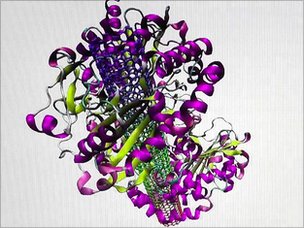
Scientists at Joseph Fourier University of Grenoble have built a biofuel cell that uses glucose and oxygen at concentrations found in the body to generate electricity.
They are the first group in the world to demonstrate their device working while implanted in a living animal. Within a decade or two, biofuel cells may be used to power a range of medical implants, from sensors and drug delivery devices to entire artificial organs.
Glucose and oxygen are both freely available in the human body, so hypothetically, a biofuel cell could keep working indefinitely.
The electrodes are made by compressing a paste of carbon nanotubes mixed with glucose oxidase for one electrode, and glucose and polyphenol oxidase for the other. The electrodes have a platinum wire inserted in them to carry the current to the circuit. Then the electrodes are wrapped in a special material that prevents any nanotubes or enzymes from escaping into the body.
Finally, the whole package is wrapped in a mesh that protects the electrodes from the body’s immune system, while still allowing the free flow of glucose and oxygen to the electrodes. The whole package is then implanted in the rat.

Monday, October 17, 2011

Psychopathic killers: computerized text analysis uncovers the word patterns of a predator


Psychopathic killers: computerized text analysis uncovers the word patterns of a predator

October 17, 2011 by Editor
The words of psychopathic murderers match their personalities, which reflect selfishness, detachment from their crimes and emotional flatness, says Jeff Hancock, Cornell professor of computing and information science, and colleagues at the University of British Columbia in the journal Legal and Criminological Psychology.
Computerized text analysis shows that psychopathic killers make identifiable word choices beyond conscious control when talking about their crimes. This research could lead to new tools for diagnosis and treatment, and has implications law enforcement and social media.
Hancock and his colleagues analyzed stories told by 14 psychopathic male murderers held in Canadian prisons and compared them with 38 convicted murderers who were not diagnosed as psychopathic. Each subject was asked to describe his crime in detail. Their stories were taped, transcribed and subjected to computer analysis.
Clues: conjunctions, physical needs, past tense
Psychopaths used more conjunctions like “because,” “since” or “so that,” implying that the crime “had to be done” to obtain a particular goal. They used twice as many words relating to physical needs, such as food, sex or money, while non-psychopaths used more words about social needs, including family, religion and spirituality. Unveiling their predatory nature in their own description, the psychopaths often included details of what they had to eat on the day of their crime.
Psychopaths were more likely to use the past tense, suggesting a detachment from their crimes, say the researchers. They tended to be less fluent in their speech, using more “ums” and “uhs.” The exact reason for this is not clear, but the researchers speculate that the psychopath is trying harder to make a positive impression, needing to use more mental effort to frame the story.
Two text analysis tools were used to examine the crime narratives. Psychopathy was determined using the Psychopathy Checklist-Revised (PCL-R). The Wmatrix linguistic analysis tool was used to examine parts of speech and semantic content while the Dictionary of Affect and Language (DAL) tool was used to examine the emotional characteristics of the narratives.
“Previous work has looked at how psychopaths use language,” Hancock said. “Our paper is the first to show that you can use automated tools to detect the distinct speech patterns of psychopaths.” This can be valuable to clinical psychologists, he said, because the approach to treatment of psychopaths can be very different.
Ref.: Jeffrey T. Hancock, Michael T. Woodworth, & Stephen Porter, Hungry like the wolf: A word-pattern analysis of the language of psychopaths, Legal and Criminological Psychology, 2011; [DOI: 10.1111/j.2044-8333.2011.02025.x]

Monday, October 10, 2011

What just happened? Why some of us seem totally spaced out


What just happened? Why some of us seem totally spaced out

October 7, 2011 by Amara D. Angelica
fMRI of individual without a paracingulate sulcus (credit: Jon Simons)
Ever wonder why uncle Louie seems to imagine stuff that didn’t happen, and calls you crazy? Well now’s there’s an explanation.
Half of you won’t like it, I warn you.
A new study of the brain by University of Cambridge scientists explains why some people can’t tell the difference between what they saw and what they imagined or were told about — such as whether they or another person said something, or whether an event was imagined or actually occurred.
Turns out it results from a normal variation in a fold at the front of the brain called the paracingulate sulcus (PCS), the scientists said.
Who you gonna believe? Me, or your lying memory?
This brain variation is present in roughly half of the normal population. It’s one of the last structural folds to develop before birth, so it varies greatly in size between individuals in the healthy population. The researchers discovered that adults whose MRI scans indicated an absence of the PCS were significantly less accurate on memory tasks than people with a prominent PCS on at least one side of the brain.
Interestingly, all participants believed that they had a good memory despite one group’s memories being clearly less reliable. OK, but the question is: if you explain this to them, do they back off from their alleged memories?
“Additionally, this finding might tell us something about schizophrenia, in which hallucinations are often reported whereby, for example, someone hears a voice when nobody’s there,” said Dr. Jon Simons from the University of Cambridge’s Department of Experimental Psychology and Behavioural and Clinical Neuroscience Institute. “Difficulty distinguishing real from imagined information might be an explanation for such hallucinations.”
That might explain UFOs. (Especially if they watched Close Encounters of the Third Kind one too many times.)
Take this MRI test (if you dare)
For the study, the researchers recruited 53 healthy volunteers based on their brain scans which showed either a clear presence or absence of the PCS in the left or right brain hemisphere. Participants were presented either with well-known word-pairs like “Laurel and Hardy” or with the first word of a word-pair and a question mark (“Laurel and ?”). In the latter condition, participants were instructed to imagine the second word of the word-pair. Then, either they or the experimenter was instructed to read the word-pair out aloud.
After a delay, a memory test was given where participants tried to remember whether they had seen or imagined the second word of each previously-encountered word-pair, or whether they or the experimenter had read the word-pair out aloud. Participants with absence of the PCS in both brain hemispheres scored significantly worse than the others at remembering both kinds of detail.
Hmm, shouldn’t courts do an MRI test for witnesses? I’m just sayin’.
Ref.: Marie Buda, Alex Fornito, Zara M. Bergström, and Jon S. Simons, A Specific Brain Structural Basis for Individual Differences in Reality Monitoring, Journal of Neuroscience, Oct. 5, 2011, 31(40):14308-14313;doi:10.1523/JNEUROSCI.3595-11.2011

Monday, October 3, 2011

Linked quantum dots could create cheap, efficient solar cells


Linked quantum dots could create cheap, efficient solar cells

September 30, 2011 by Editor
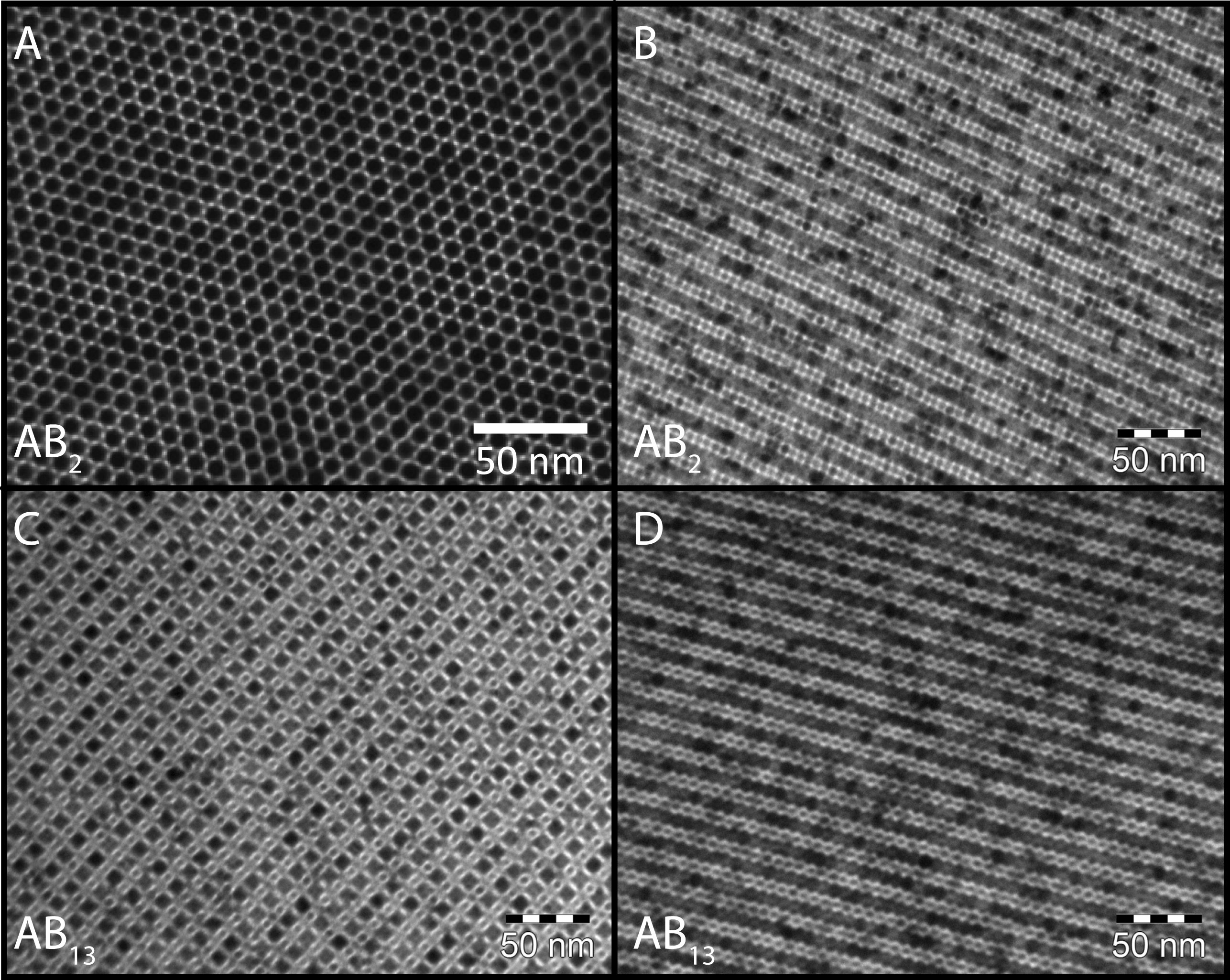
Self-assembled binary superlattices of two different kinds of quantum dots. The controllable, ordered interface between the different semiconductor nanocrystals represents a promising system for use as efficient solar cells. (Credit: TU Delft)
Researchers at the Kavli Institute of Nanoscience at TU Delft in the Netherlands have demonstrated that electrons can move freely in layers of linked semiconductor nanoparticles under the influence of light  in a breakthrough that could lead to cheaper, more-efficient solar cells made from quantum dots.
Right now, crystalline silicon solar panels are expensive to produce, said the researchers, led by TU Delft Assistant Professor A.J. Houtepen. Cheaper solar cells are available but are inefficient. For example, an organic solar cell has a maximum efficiency of 8 percent, the researchers said.
More-efficient quantum dots
One way of increasing the efficiency of cheap solar cells is use of semiconductor nanoparticles called quantum dots. In theory, the efficiency of these cells can be increased to 44 percent due in part to an “avalanche effect” demonstrated by researchers from TU Delft and the FOM Foundation in the Netherlands in 2008.
In current solar cells, an absorbed light particle can only excite one electron, creating an electron-hole pair, while in a quantum dot solar cell, a light particle can excite several electrons. The more electrons that are excited, the greater the efficiency of the solar cell, the researchers said.
Up to now, the creation of electron-hole pairs under the influence of light was only demonstrated within the limits of a quantum dot. To be usable in solar cells, though, it is essential that electrons and holes are able to move and create an electrical current that can be collected at an electrode.
The researchers have now demonstrated that the electron-hole pairs can also move as free charges between the nanoparticles. They linked nanoparticles together, using very small molecules, so that they were very densely clustered while still remaining separate from each other. The nanoparticles are so close together that every single light particle that is absorbed by the solar cell actually causes electrons to move.
Ref.: Elise Talgorn, et al., Unity quantum yield of photogenerated charges and band-like transport in quantum-dot solids,Nature Nanotechnology, 2011; [DOI:10.1038/nnano.2011.159]